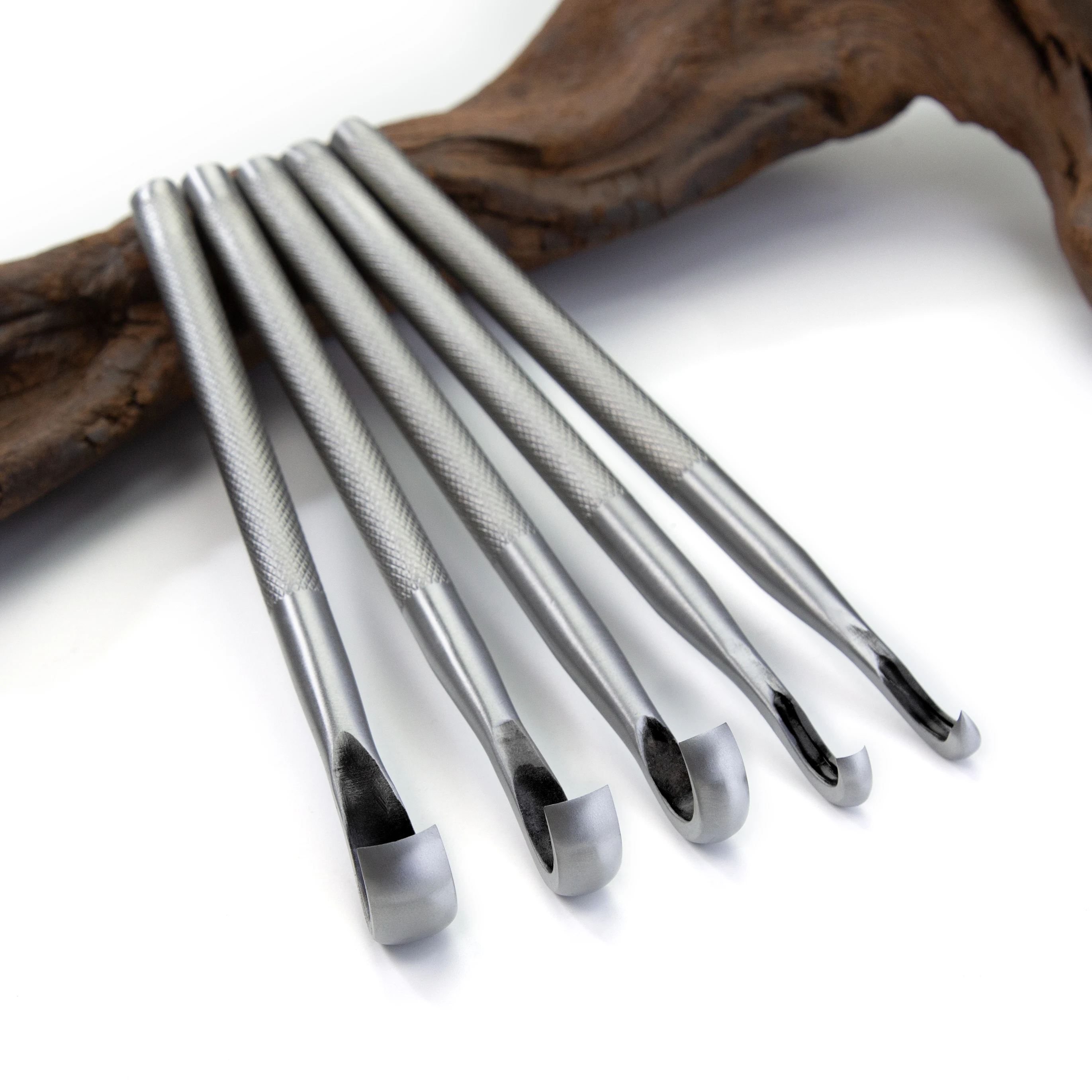
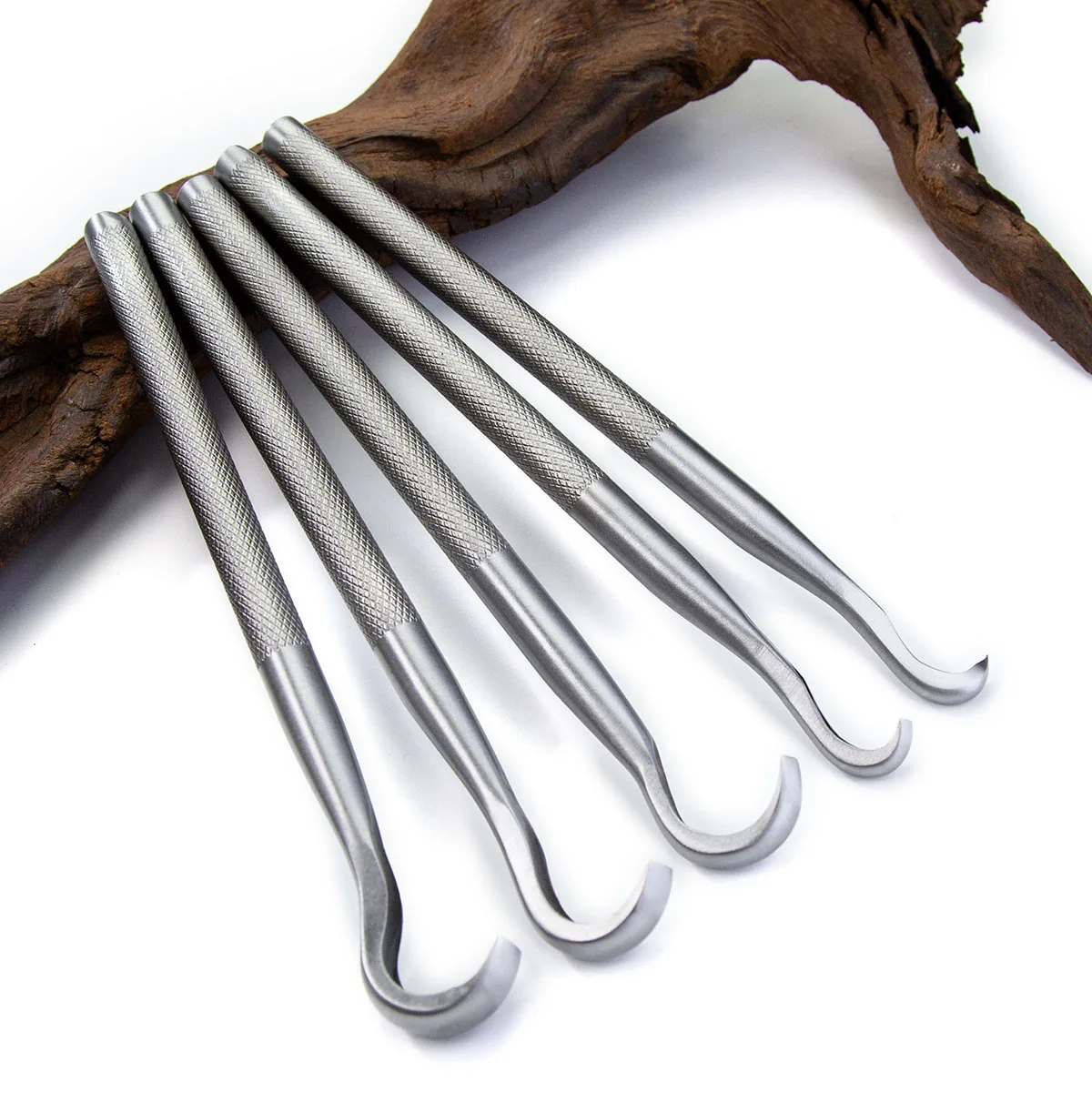
Bonsai Carving Tool Set CT-A Forging By 5Cr15MoV Alloy Steel Bonsai Tools from TianBonsai


Bonsai Carving Tool Set CT-A Forging By 5Cr15MoV Alloy Steel Bonsai Tools from TianBonsai
SPECIFICATIONS
Battery Included: no
Brand Name: TianBonsai
Certification: NONE
Choice: yes
Feature: Anti-Slip
Finishing: sanding
High-concerned chemical: None
Material: Alloy Steel
Model Number: CT-A
Origin: Mainland China
Pruner Type: ANVIL
Pruning Tool Type: Pruning Knives
semi_Choice: yes
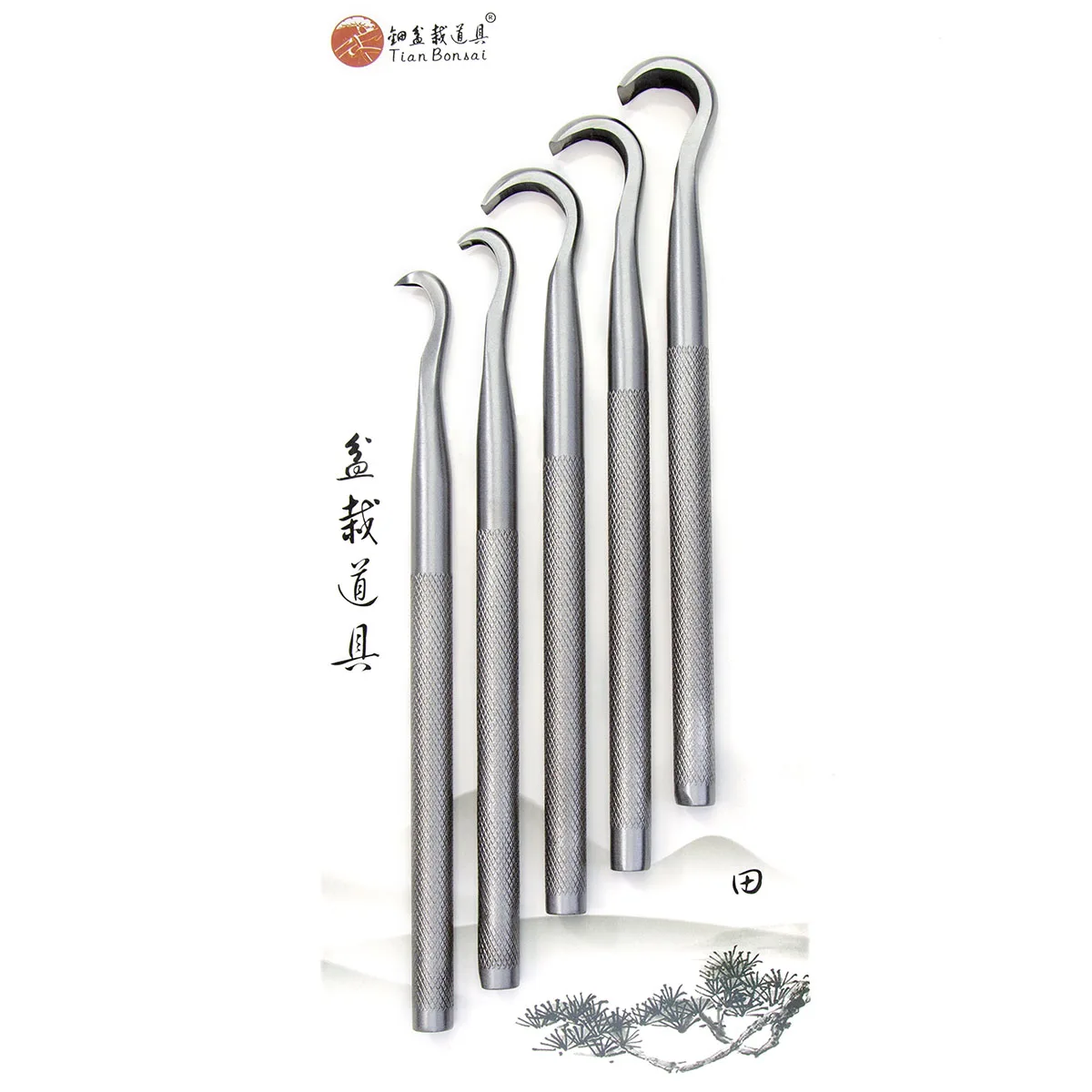
Function Detail:
In the art of bonsai, carving knives play a crucial role. They are primarily used to shape and imitate the unique forms and textures of trees and rocks that have been weathered by time, wind, and rain in nature. Their core functions are reflected in the following aspects:
Creating Jin (Deadwood) and Shin (Deadwood Branches):
-
Jin (Deadwood): This is a technique in bonsai that imitates the naturally dead trunk sections of trees in nature. Carving knives are used for:
Removing Bark: Carefully stripping the bark from selected areas to expose the underlying wood (xylem).
Carving Wood Grain: On the exposed wood surface, carving knives are used to meticulously etch textures that mimic the effects left by natural weathering, water erosion, insect/ant damage, lightning strikes, etc. This includes effects like grooves, holes, uneven surfaces, and striated patterns. The goal is to imitate the sense of age and natural beauty formed over many years in the deadwood parts of ancient trees.
Shaping Form: Helping to shape the overall form of the Jin, making its lines smooth, transitions natural, and aligning it with both aesthetic principles and natural patterns.
Shin (Deadwood Branches): Refers to the naturally dead, white-colored branches formed at the top or sides of a tree. Carving knives can be used to finely refine the tip shape of Shin branches, making them appear more natural, sharper, or giving them a more weathered look.